
by Alexandra Indra Kruse for this Carl Kruse Blog
Some years ago, I wrote a piece about Christopher Columbus and the controversy surrounding monuments erected in his honor. At the time, statues of Columbus were being vandalized, removed, and, in some cases, quite literally beheaded. The spectacle prompted a larger question: Should we feel obliged to continue honoring historical figures simply because previous generations considered them heroes?
Today, on Columbus Day, I find myself revisiting that question.
There is little doubt that Christopher Columbus was an extraordinary man. Whatever else that could be said about him, he possessed courage, determination, navigational skill, and a willingness to undertake an adventure that few others would have contemplated. His 1492 voyage across the Atlantic was an astonishing feat of seamanship, particularly given the limited geographical knowledge and navigational instruments of the time.
Columbus did not of course discover America. Millions of people already lived there and Norse explorers had reached North America centuries earlier. Nor did he accomplish what he actually set out to do, which was to find a western maritime route to Asia. He went to his grave believing that the lands he had encountered were part of Asia or its neighboring islands.
Nevertheless, his voyages changed the world. They established sustained contact between Europe and the Americas and set in motion an extraordinary exchange of peoples, crops, animals, ideas, technologies, and diseases. The consequences were immense, shaping the modern world in ways that are difficult to overstate.
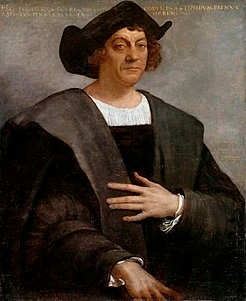
And yet, alongside these achievements lies a much darker history.
Columbus was not merely an explorer who happened to arrive in unfamiliar lands. He also became a colonial governor who participated in the subjugation and exploitation of Indigenous peoples. Under his authority, inhabitants of the Caribbean were subjected to forced labor, tribute, violence, and enslavement. Indigenous captives were shipped across the Atlantic. The pursuit of imperial wealth increasingly displaced whatever curiosity or wonder might have accompanied those first encounters.
The consequences for native populations were catastrophic. Warfare, exploitation, displacement, and especially diseases introduced from Europe devastated societies that had existed long before the arrival of the Spanish.
It would be historically unfair to hold Columbus personally responsible for every horror over the following centuries. He neither invented imperial conquest nor controlled everything that followed his voyages. European expansion was already underway, and other empires would almost certainly have crossed the Atlantic sooner or later.
But neither was Columbus an innocent bystander. He helped establish the machinery of conquest, and he personally benefited from the system he helped create.
Indeed, complaints about his conduct as governor became so serious that the Spanish crown had him arrested and returned to Spain in chains in 1500. Although he was subsequently released, he never regained his governorship. Even by the standards of his time, his administration was deeply controversial.
This brings us to a familiar objection: Should we really judge people who lived five hundred years ago by the moral standards of today?
There is something to that argument. Historical figures were products of their times, and we should be careful not to imagine that we would necessarily have behaved more nobly had we lived in their circumstances.
Moral judgments become easy when made from the comfort of several centuries’ distance.
But there is a difference between understanding the historical context of someone’s actions and excusing those actions altogether. Slavery, cruelty, and the mistreatment of innocent people were not universally accepted without objection even in Columbus’s day. There were contemporaries who questioned the treatment of Indigenous peoples. Moral disagreement is hardly a modern invention.
More importantly, understanding history and honoring historical figures are two very different things.
Consider the Confederate generals whose statues once occupied prominent places in American cities. Robert E. Lee, for example, was by most accounts a gifted military commander. His abilities as a soldier can be acknowledged, and even admired in a narrow professional sense. But does that mean he deserves a statue in a public square, particularly when the cause he fought for was inseparable from the preservation of slavery?
I would argue no.
Removing a statue of Lee does not erase the American Civil War from history. Nor does removing a statue of Columbus erase the voyages of 1492. History resides in books, archives, museums, scholarship, and our collective understanding of the past. A monument serves a different purpose. It is a public expression of admiration, a statement about whom we choose to elevate. There are no statues of Hitler anywhere in Germany.
And those choices are not immutable.
There is also a legitimate human dimension to Columbus Day that deserves recognition. For generations of Italian Americans, Columbus became a symbol of ethnic pride and acceptance in a country where Italian immigrants often encountered discrimination. To many families, the holiday represents heritage and belonging rather than colonial conquest. That history, too, should be respected.
But surely it is possible to celebrate Italian heritage without requiring the continued veneration of one particular Italian navigator. Italy has produced an almost inexhaustible collection of artists, scientists, writers, composers, and thinkers worthy of admiration.
Perhaps the larger problem is our tendency to turn complicated human beings into uncomplicated heroes. We build monuments, name holidays, and construct national myths around individuals whose lives were invariably more contradictory than the stories we tell about them.
Columbus was a remarkable navigator. He was also a deeply flawed man whose actions contributed to enormous human suffering. Both statements can be true.
We need not pretend his achievements were insignificant, nor must we insist that his misdeeds invalidate everything he accomplished. We can acknowledge the full measure of his historical importance without placing him on a pedestal.
Ultimately, the question is not whether Christopher Columbus deserves to be remembered. Of course he does. His place in world history is secure.
The question is whether remembering someone requires us to honor him.
I see no reason why it should.
========================
The homepage of this Carl Kruse Blog is at https://carkruse.org
Contact: carl AT carlkruse DOT com
Find Carl Kruse on his other blog “Rummaging for the Useful” at https://carlkruse.at.