
by Alexandra Indra Kruse with Carl Kruse
Every year when Martin Luther King Jr. Day returns, it feels like a moral checkpoint. Not a moment for nostalgia, but for calibration: Are we living in the direction of justice, or simply congratulating ourselves for admiring it from a safe distance? Few documents answer that question with more urgency than King’s “Letter from a Birmingham Jail,” a text forged in confinement yet expansive enough to reach across decades. It is both a defense and an indictment—an explanation to critics, and a mirror held up to a society that wanted change to be painless, gradual, and conveniently scheduled. Every MLK Day here at the Carl Kruse Blog we take the chance to review the letter and reflect on it (See here, and here, also here, and finally here).
King wrote the letter in April 1963 after being arrested for participating in nonviolent protests in Birmingham, Alabama, a city notorious for violent resistance to desegregation. From his cell, he responded to a group of white clergy who had criticized the demonstrations as “unwise” and “untimely,” urging Black citizens to seek justice through the courts and to wait for negotiation rather than disrupt public order. The clergy’s posture was familiar even then: sympathy for the goal, discomfort with the method; praise for equality, frustration with urgency. In that tension—between professed ideals and actual tolerance for the discomfort required to realize them—King located the great spiritual crisis of American life.
One of the letter’s most enduring powers is its insistence that waiting is not neutral. We often treat “later” as a reasonable compromise, a polite alternative to conflict. King demolishes that illusion. “Justice too long delayed is justice denied,” he wrote—one of those sentences that echoes because it exposes the moral cost of delay. Waiting is not simply time passing; it is suffering prolonged, doors kept shut, opportunity quietly stolen. When a child is taught by the world’s repeated message that they are less, the harm is not hypothetical or academic. It is daily, intimate, cumulative. King’s argument is not that patience is a vice in all contexts, but that patience demanded from the oppressed is often a disguised demand for their continued submission.
The “Letter” is frequently remembered for its soaring moral rhetoric, but it is also a meticulous piece of reasoning. King explains why nonviolent direct action is not reckless chaos but a disciplined strategy: it creates “constructive, nonviolent tension” that forces a community to confront the issues it would prefer to ignore. That phrase—constructive tension—still startles modern ears because we are trained to treat tension as failure. We chase “civility” as if it were the same thing as goodness. Yet King understood what many societies keep relearning: meaningful change rarely arrives through comfort. Tension is often the beginning of honesty. Without pressure, power has little reason to yield anything. Without disruption, injustice can settle into the furniture of everyday life.
What makes King’s moral fortitude so electrifying is that it is paired with humility—humility not in the sense of shrinking from the truth, but in the sense of grounding his claims in a larger ethical tradition. He appeals to Christian theology, American democratic ideals, and the philosophy of natural law. He makes a careful distinction between just and unjust laws, arguing that a just law aligns with moral law and uplifts human personality, while an unjust law degrades it. He insists that one has not only a legal right but a moral responsibility to resist unjust laws. This is not rebellion for its own sake. It is conscience refusing to be anesthetized.
And perhaps most challenging for readers—then and now—King directs some of his sharpest criticism not at overt racists, but at the “white moderate,” the person who prefers order to justice. The letter is unsparing on this point because it is trying to rescue the nation from the soothing lie that extremism is the real problem. King was labeled an extremist; rather than run from the word, he reframed it.
The question, he suggests, is not whether we will be extremists, but what kind: extremists for hate or for love, for oppression or for liberation. In a time when moral language is often flattened into vague positivity, King restores its edge. Love, in his vocabulary, is not sentiment. It is a demanding discipline. It costs something.
This is why the letter remains timeless: it names patterns that reappear whenever people confront injustice. There is always a call for patience. There is always a warning against “divisiveness.” There is always the claim that the methods are the problem, not the conditions that made the methods necessary. And there is always the temptation—especially among the comfortable—to treat the struggle for justice as an occasional concern rather than a continuous obligation.
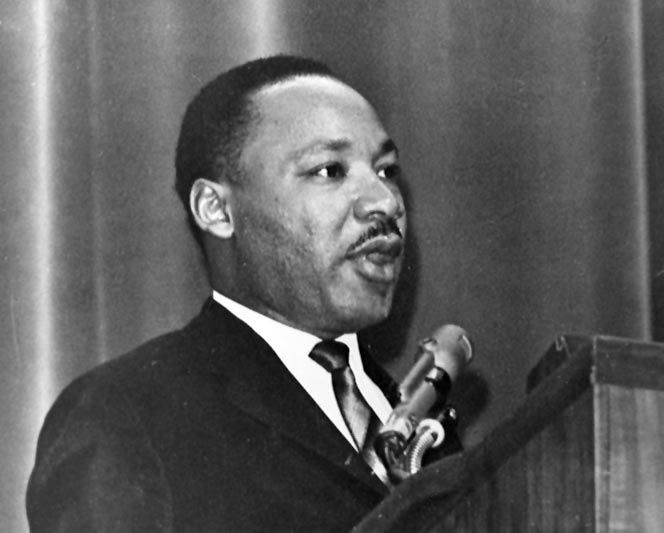
Yet the “Letter from a Birmingham Jail” is not only critique; it is also a blueprint for courageous citizenship. King models a way of arguing that is intellectually serious and morally alive. He does not merely condemn; he persuades. He speaks to his opponents as moral agents capable of change, even as he refuses to flatter their complacency. That combination—charity without surrender—is rare. It is part of his greatness. He manages to be both firm and humane, clear-eyed and hopeful, a man who can stare at brutality and still insist on the possibility of redemption.
On MLK Day, honoring King means more than repeating his most famous lines. It means letting the letter disturb us a little. It should make us ask: Where have we confused peace with quiet? Where have we demanded “proper channels” as a way to avoid the actual work of justice? Where have we congratulated ourselves for agreeing in theory while resisting in practice? The letter is not simply a historical artifact; it is a living ethical instrument that tests our priorities.
If King teaches anything in Birmingham, it is that moral progress is not automatic. It requires people who will accept inconvenience, misunderstanding, and risk. It requires people who refuse the comforting myth that time itself will heal injustice. Time is a tool, King reminds us, and it can be used destructively as well as constructively. The arc of the moral universe does not bend by itself; it is bent by hands—ordinary hands—willing to do extraordinary work.
To honor King today is to inherit that responsibility. It is to practice a form of love that is not passive but active, not vague but precise. It is to recognize that “untimely” is often what justice looks like to those who benefit from the current timetable. It is to cultivate the courage to create “constructive tension” when silence would be easier. And it is to remember that the most powerful words in the “Letter from a Birmingham Jail” are not merely arguments—they are an invitation: to wake up, to stand up, and to keep walking, even when the road runs through a jail cell.
That is the jolt of moral fortitude the letter still carries. It does not let us admire King from a safe distance. It calls us nearer—to his discipline, his clarity, his refusal to settle for partial truths. On MLK Day, we do not commemorate a man. We recommit to a moral posture: that justice is not a favor granted by the comfortable, but a debt owed to the human dignity of all.
=========
The Carl Kruse Nonprofits Blog homepage is at https://carlkruse.org
Contact: carl AT carlkruse DOT com
You can also find Carl Kruse on Flickr.