By Carl Kruse
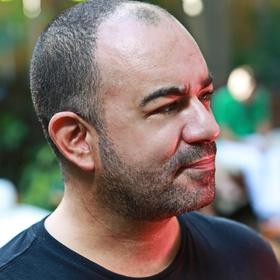
Tomorrow — December 27— would have been Carson Kievman’s birthday, and it feels like the right moment to talk about him the way he preferred to be remembered: not as a footnote in a program book, but as a living current of energy—wry, stubbornly idealistic, and always building the next thing. Carson was a composer, yes, and a serious one, but he was also something rarer: a composer who treated music not as a private shrine, but as a public square.
Carson’s life in music had the arc of an American original. Born December 27, 1949, he came out of Southern California and into an era when “composer” could still mean inventor, impresario, organizer, and troublemaker all at once. He studied at CalArts, then later earned a PhD at Princeton, collecting the kind of training that could have pushed him into a safe institutional lane—tenure, committees, neat biographies. Instead, he kept choosing the harder route: work that didn’t fit tidy categories, projects that required hauling the piano up the stairs yourself (sometimes metaphorically, sometimes not), and productions that existed because he simply refused to accept that they could not.
If you look at the descriptions of his output, you’ll see numbers that sound almost mischievous—operas, symphonies, big theatrical works that blur lines between music, drama, and spectacle. Depending on who’s counting (and Carson himself seemed happy to keep the count elastic), he wrote multiple operas and multiple symphonies, with sources describing anything from seven operas and six symphonies to “ten operas and eight symphonies.” That range actually feels fitting. Carson’s career wasn’t a single straight road; it was a map full of side routes, detours, and new paths cut through the brush because he wanted to see what was there.
And then there’s Miami—where Carson’s story becomes not just about what he wrote, but about what he made possible. For decades, he was part of the cultural engine of Miami Beach, and in a way, SoBe Arts was his most “performed” composition: a living work, scored for teachers, students, neighbors, donors, skeptics, and anyone who wandered close enough to be drafted into the idea.

The origin story of the SoBe Institute of the Arts (often just “SoBe Arts”) is classic Carson: it didn’t begin with a boardroom or a glossy launch. It began with one request to find a violin teacher—then lessons happening in his apartment—then a rented studio—then, before Miami could quite decide what was happening, a full arts institute existed because Carson kept saying “yes” to the next practical step. He founded it, managed it, and used it as a bridge between “high culture” and everyday life—exactly the kind of bridge Miami often says it wants, but that only appears when someone does the work of building it plank by plank.
Helping Carson raise money and support SoBe Arts wasn’t just philanthropy in the abstract; it was participation in Carson’s central belief: that art education shouldn’t be reserved for the already-initiated, and that the classics can belong to everyone, including kids who would otherwise never get close to them. In that sense, the “later work” of his life wasn’t a retirement from composing. It was composition on a civic scale—writing a place into existence where music could keep happening.
Carson also never stopped being the composer in the room. Works like his opera “Tesla” drew attention for their ambition and their voltage—music theater that wanted to be more than a polite evening out. And his orchestral output included pieces like Symphony No. 2(42), which was recorded and released—one example of his persistence in getting large, difficult work not merely written, but actually brought into the world.
When Carson died in October 2021 at age 72, those who wrote about him emphasized not just the catalog, but the personality: innovative, energetic, an educator, a producer—someone who left behind institutions and friendships, not only scores. His later years included serious health struggles, and it’s hard not to feel the injustice of that—especially for someone whose whole temperament leaned forward, toward the next project.
But tomorrow, on his birthday, the best tribute may be the most Carson-like one: a little forward motion. Play something he loved. Put Bach on loudly enough that the neighbors learn something. Tell a story from Miami that ends with everyone laughing at how improbable the whole SoBe Arts idea sounded right up until it existed. And remember that the real measure of a musical life isn’t only what’s on the page—it’s the number of people who found their way into music because one composer decided the door should be open.
====================
This Carl Kruse Blog homepage is at https://carlkruse.org
Contact: carl AT carlkruse DOT com
Other articles on Carson are here, and here and also here.